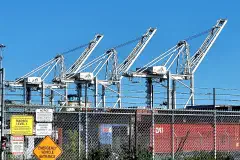
Carmakers face 25% tariffs
The automotive industry’s worst geopolitical nightmare materialized as Washington enacted sweeping 25 per cent tariffs on imported motor vehicles and critical automotive sub-assemblies.
The automotive industry’s worst geopolitical nightmare materialized as Washington enacted sweeping 25 per cent tariffs on imported motor vehicles and critical automotive sub-assemblies.
Following weeks of temporary stays and diplomatic maneuvering, the 25 per cent blanket tariffs on imports from Canada and Mexico took full statutory effect, alongside an escalated 20 per cent duty on Chinese goods.
A central pillar of the administration’s new trade doctrine is the formal classification of foreign Value-Added Taxes (VAT) as discriminatory non-tariff trade barriers.
The White House’s sudden imposition of an uncompromising 25 per cent tariff on imported steel and aluminum, stripped of historical partner exemptions, has sent immediate shockwaves through domestic manufacturing supply chains.
Economic textbook orthodoxy dictates that when a large economy imposes across-the-board tariffs, its domestic currency must appreciate to restore external balance.
The White House’s trade strategy has settled into an exhausting, high-velocity operational rhythm: weaponize tariff threats over the weekend, extract rapid diplomatic concessions, and declare temporary enforcement pauses.
The inauguration of Donald Trump arrived without the immediate, sweeping tariff executive orders that markets had spent weeks bracing for.
The White House’s formal block of Nippon Steel’s proposed $14.9 billion acquisition of United States Steel marks the definitive subordination of cross-border capital mobility to domestic industrial politics.
Corporate financial planning for 2025 has been compressed into a single unhedgeable variable: trade policy.
The suspension of the statutory US debt ceiling, negotiated in May 2023, officially terminates on 1 January 2025.
As Wall Street economic desks finalize their 2025 outlooks, quantitative modeling has shifted entirely to evaluating the macroeconomic consequences of prospective tariff scenarios.
Black Friday shopping malls and e-commerce platforms buzzed with an unusual sense of urgency this year.
Corporate procurement managers across the United States have embarked on an aggressive inventory hoarding campaign.
As the US Dollar Index (DXY) marched back toward 107 in the wake of the US election, trade economists began evaluating a critical theoretical question: can a surging dollar neutralize the inflationary impact of proposed import tariffs?
Donald Trump’s formal reaffirmation of plans to impose an aggressive sixty per cent tariff on all imports from China represents an unprecedented economic shock.
As election night returns confirmed Donald Trump’s decisive victory alongside a Republican sweep of Congress, the US sovereign bond market delivered an immediate, violent verdict.
An exhaustive fiscal analysis published by the Committee for a Responsible Federal Budget (CRFB) delivered a sobering quantification of the 2024 presidential platforms.
With the US presidential election approaching, fixed-income markets have succumbed to acute fiscal anxiety.
As the prospect of aggressive new tariff regimes dominates the political debate, empirical research into the 2018–2019 trade war offers definitive evidence regarding who actually bears the cost of import duties.
Joe Biden’s historic decision on 21 July to withdraw his candidacy for the presidency and endorse Kamala Harris has injected profound uncertainty into American fiscal projections.
Protectionist dogma rests on a simple premise: taxing foreign imports will eliminate the trade deficit and restore domestic industrial supremacy.
Donald Trump’s proposal to impose a universal baseline tariff of ten per cent on all foreign imports, alongside a sixty per cent levy on Chinese goods, has ignited fierce debate across corporate finance departments.
The 'Trump trade' has taken command of fixed-income trading desks.
The presidential debate on 27 June between Joe Biden and Donald Trump delivered a profound shock that reverberated far beyond political circles.
The European Commission has officially drawn its trade battle lines, imposing provisional countervailing duties of up to 38.1 per cent on imports of Chinese battery electric vehicles (EVs).
As millions of American taxpayers finalized their annual federal income tax filings on 18 April, quantitative analysts across Wall Street money market desks were performing their own high-stakes forensic calculations.