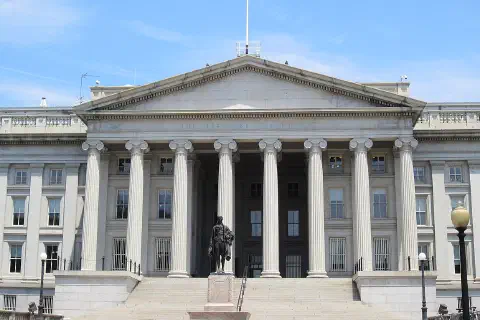
Court rules Trump's new tariff illegal too

The White House’s backup trade strategy suffered a devastating judicial repudiation on 7 May as the US Court of International Trade (CIT) officially invalidated the administration’s temporary 10 per cent tariffs enacted under Section 122 of the Trade Act of 1974. The court ruled that the administration failed to satisfy the statutory prerequisite of demonstrating a 'large and serious balance-of-payments deficit.'
The Collapse of the Statutory Bridge
Section 122 was explicitly designed by Congress in 1974 to manage balance-of-payments crises under the Bretton Woods fixed-exchange-rate regime, where gold or foreign reserves were rapidly draining from the central bank. In modern floating-rate finance, where the United States effortlessly finances its current account through capital inflows, the CIT ruled that running a merchandise trade deficit does not constitute a balance-of-payments emergency. The administration’s temporary tariff shield was struck down barely seventy-five days into its 150-day statutory clock.

Litigation as a Core Corporate Strategy
For corporate treasurers, the ruling cements a transformative operational reality: aggressive federal litigation has become the most effective and profitable tariff-avoidance strategy available. The CIT’s invalidation of Section 122 confirms that executive trade policy by statutory misdirection is legally bankrupt, turning the federal courts into corporate America's ultimate shield against arbitrary border taxation.
Write to The Lombard Review at contact@thelombardreview.com